
Watching the Unwatchable
Watching the Unwatchable
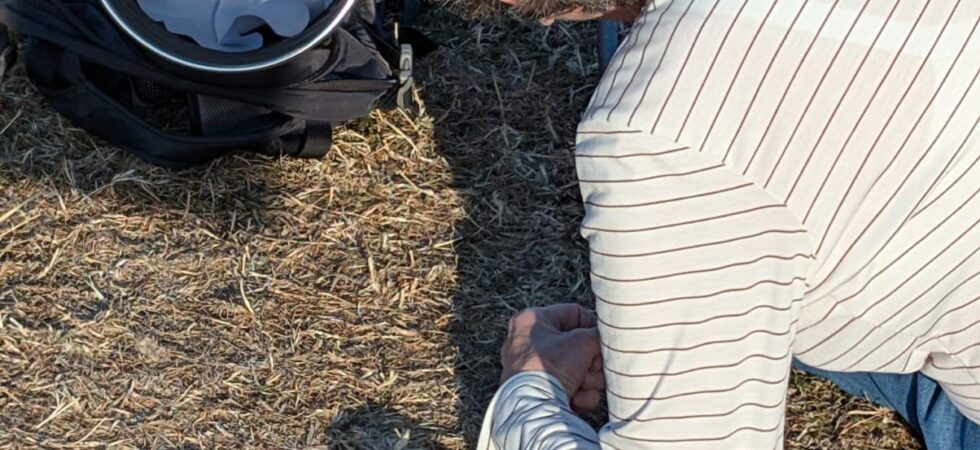
Before starting to write a newsletter, I usually look through photographs from the past month for ideas. This is also a good opportunity to discard evidence of when the camera adopts a mind of its own to photograph feet, floors, and dark pocket linings. Cameras may also contain culprits that invite the question, “What on earth is that?”
This month was no exception. For a few moments I pondered over the back of my head and the interior of a wastepaper basket. Although this wasn’t a beautiful composition, I was, however, reminded of the eclipse.
Earlier on that day I had messaged round the family to warn them about the risk of damaging their eyes. The afternoon was spent making equipment, with the clear advantage being married to a former primary school teacher. I spent some time wondering where the ideal place was to view an eclipse.
Eventually we shared a local playing field with a couple of serious spectators, who brought chairs and remained hidden behind purpose-made glasses. There was a man with a camera with a telephoto lens, several dog-walkers and a few young people who asked me what was happening.
I brought a camping stool as the grass was prickly after weeks of drought. Our scientific equipment included a wastepaper basket converted into a pinhole camera, some white card fastened to a clipboard and a large serving spoon with drainage holes.
My light-filtering serving spoon produced about thirty identical images of the eclipse. Our wastepaper basked also provided an image of the eclipse if you peered in at the correct angle.
As the sky darkened, the field went very quiet. Although we all knew where the sun and moon were, no one dared look at them directly.
That evening my family shared photographs of them watching the eclipse. Although we had all been following the same event, our descriptions, our implements and what we had actually seen were different. To me, this was much like interfaith. Our individual experiences of a power no one of us can directly see, are best understood through sharing.
Sarah Griffin