
Nine Sacred Nights of Hinduism
Nine Sacred Nights of Hinduism
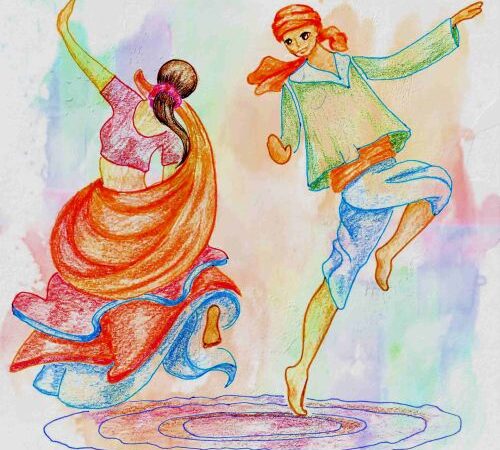
On 16th October this year, at the start of a waxing moon, earth will have once again tipped its Northern point away from the Sun. Those of us in the northern half now face the cold, dark months and we mark this with Nine Sacred Nights ~ known as Navaratri ~ in the Sanatana Dharma (Hinduism). During these Nine Nights we read and contemplate an ancient scripture, the Devī Māhātmyam, a story within a story, told by a sage to seekers. It begins with the sad plight of a king and merchant who find each other in a forest. Both have been rejected by the people they loved, by their own families, hence they find themselves wandering in a forest alone and bewildered. They seek out the counsel of a sage who also lives there, and he recounts stories of the Devi, the Divine Goddess.
Is the Devī Māhātmayam history or myth? There is a beautiful term in Sanskrit that answers this: itihasa (iti ha āsa = so it was). In the West the stories that are termed ‘myth’ are considered something imaginary and certainly not a reliable account of ‘truth’. Itihasa, is considered neither myth nor history ~ rather a narrative from the past that carries a teaching.
In this narrative we turn to the Divine in feminine form. In Hinduism the Divine is worshipped as both male and female ~ and also as That which is beyond gender and therefore encompasses both. The Devī Māhātmyam is a visionary’s text, designed to take us from the periphery of our being, where ‘I’ and ‘you’ and all kinds of differences exist, to the centre of Being where only the One is.
What we learn as we contemplate this teaching is how to make this journey from self to the realisation of that all-encompassing One ~ a journey that has faith as its heart. Faith here is not a belief system; not a product of the mind, but rather an openness of the heart to possibilities beyond our belief systems. Thus it guides us through the darkness of separation and independence to the light of interdependence, Oneness and Wholeness.
Swami Ambikananda